Russell Ferguson lets out a sigh. He’s standing in the doorway of Abbey’s studio. Ten minutes late for their studio visit. Despite being the chair of UCLA’s MFA program, Ferguson and Abbey have no relationship. He never looks Abbey in the eye.
“Come in!” Abbey jumps up effusively. Maybe too much.
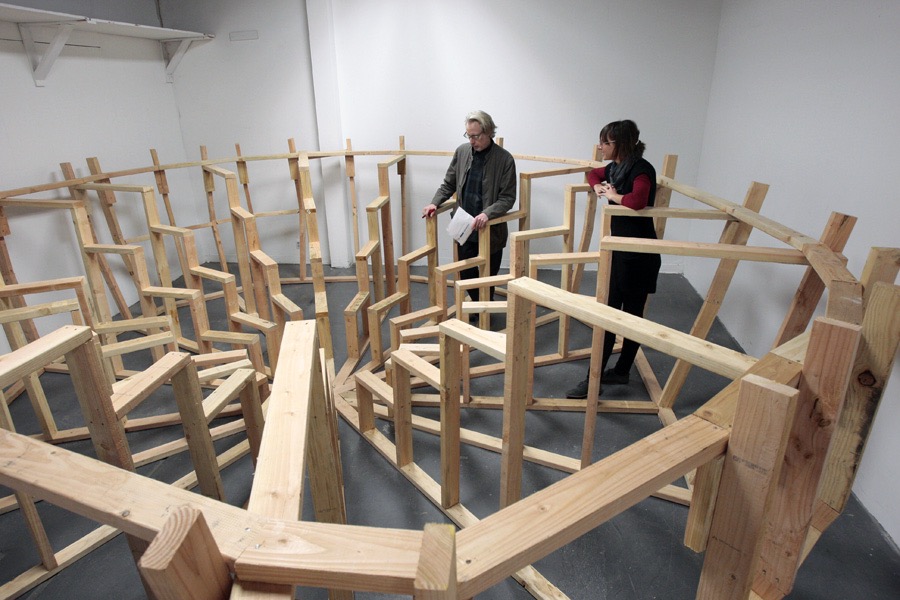
Her entire studio is filled with the wooden skeletal structure of a scaled down sports arena. It looks like the entrails of a schooner. It’s called “Stadium.”
On the walls are large prints of some photographs Abbey took over the summer while attending an artist residency in Como, Italy. The Ratti Foundation specializes in bringing an international group of artists to a historically over-priced, resort town and then encourages them to have critical conversations about art in an environment that always already condemns them as impoverished providers of culture to a wealthy elite.


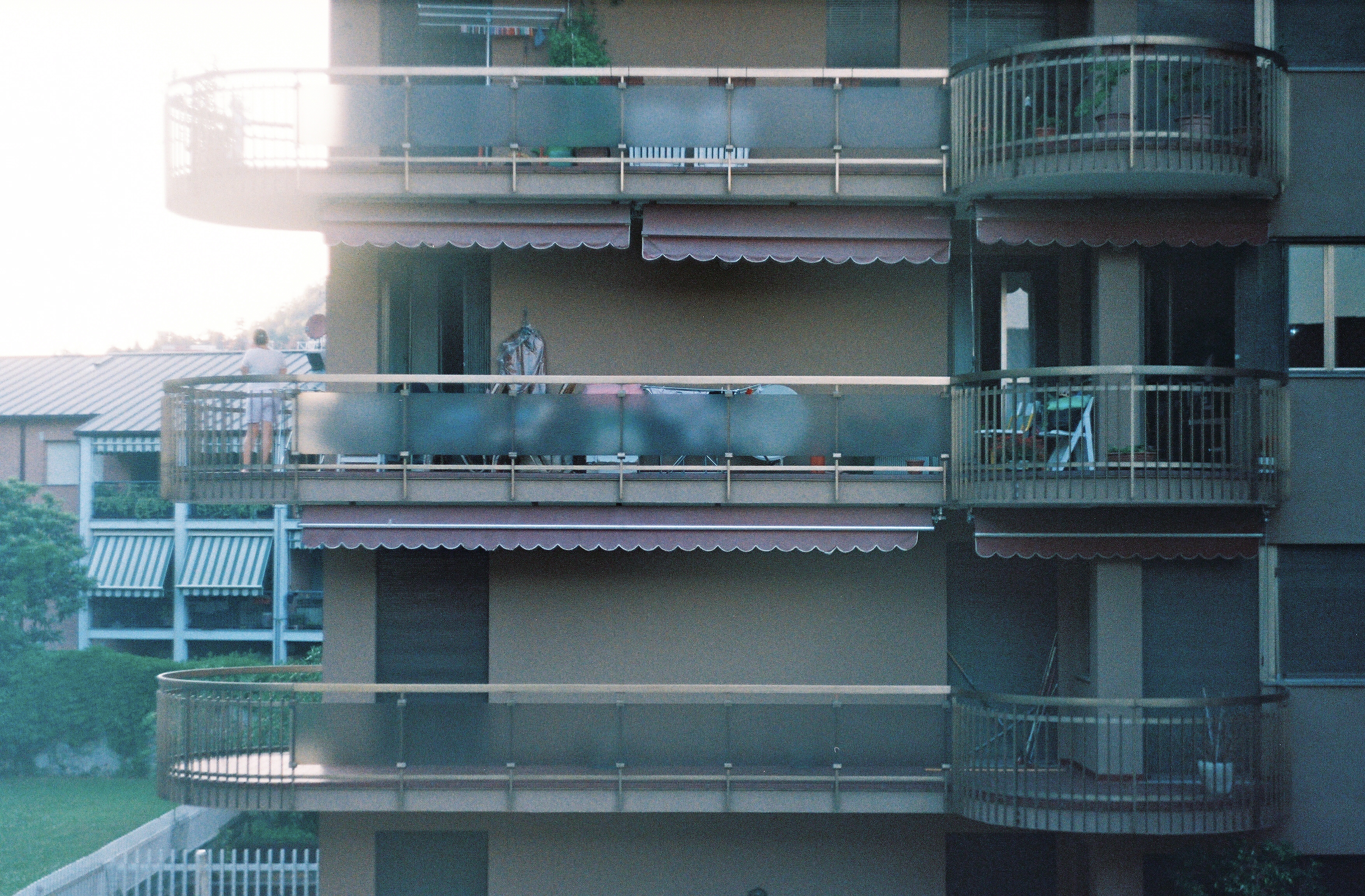
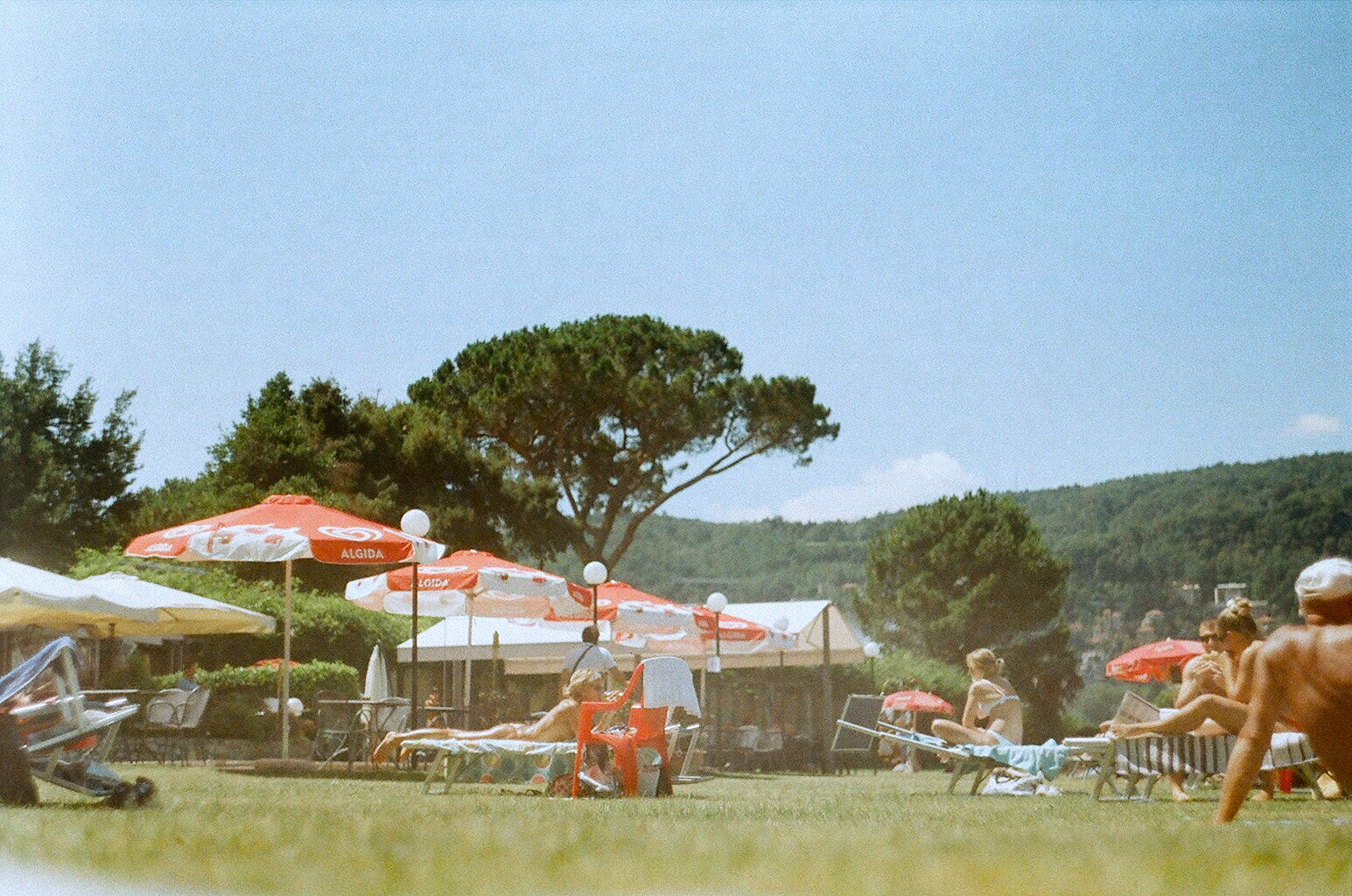
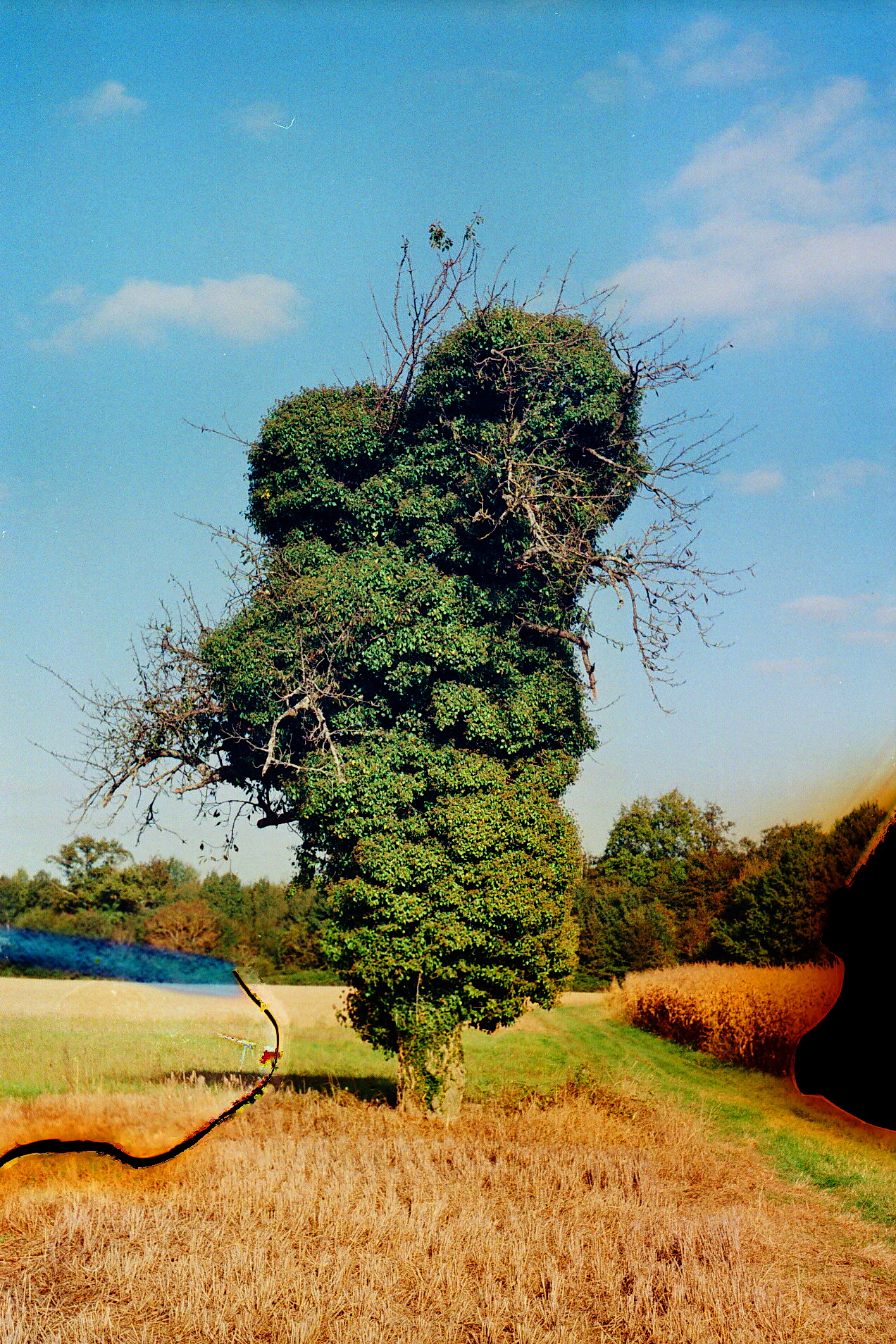
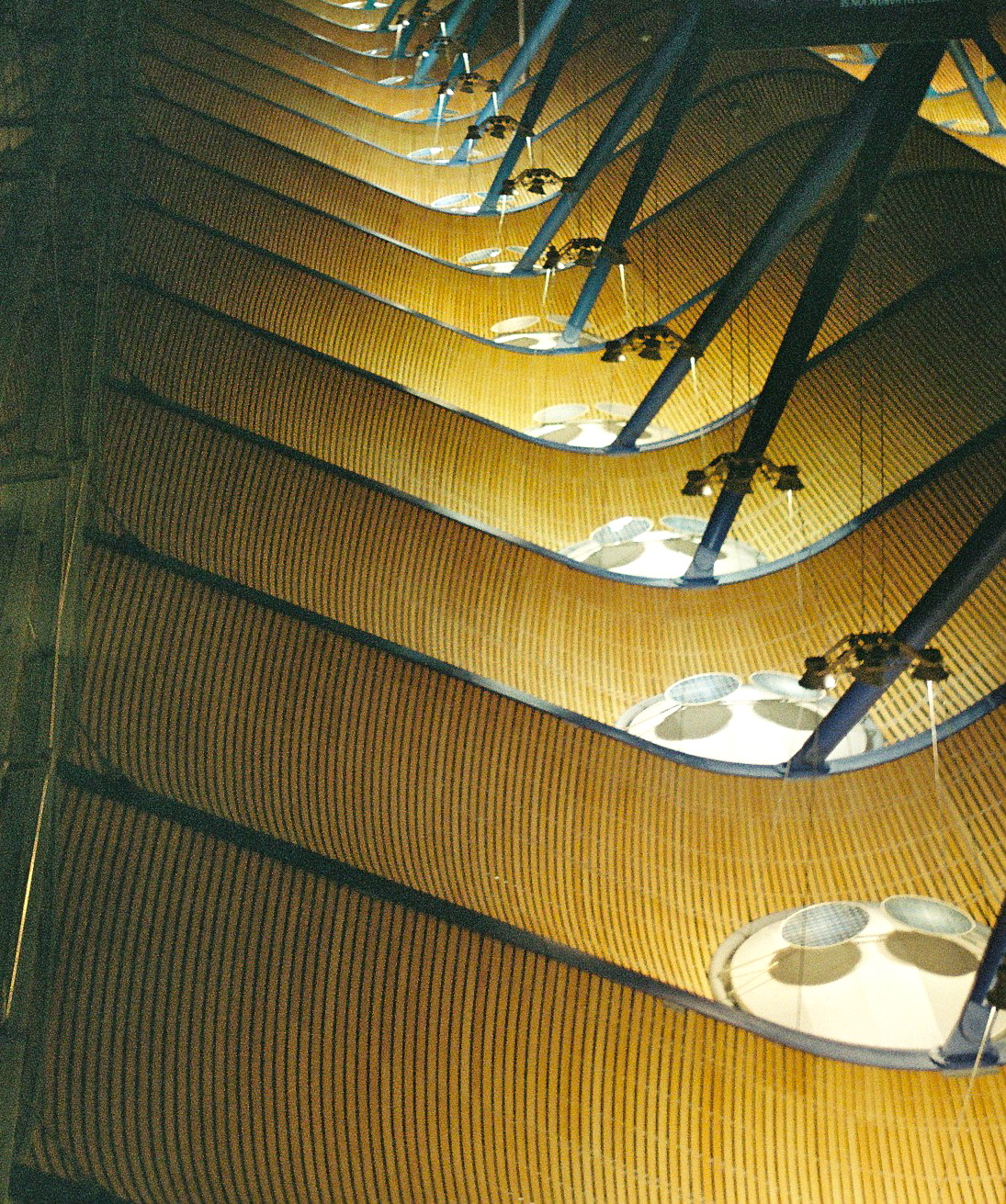
Abbey hoped that somewhere between the dreamy images of Northern Italy and the roughshod carcass of a stadium there could emerge a conversation on the artist as performer. Who are artists meant to be? How are they meant to inhabit the institutional spaces available to them, and the booze fueled art fair scene, and the stodgy lecture halls? At what point does it all become schizophrenic? At what point do artists just accept that they are the pressure release valve for a capitalist driven society of card punching 9-5’ers who look to the arts, and particularly the artists, to act the freak, entertain, and let loose a primal scream for all of humanity?

Ferguson wedges himself between structure and wall. He gives a great sigh.
“Water?” She offers.
“No thanks.” He declines. Everything.
Looking around the room, he rubs his palm on a rough two by four. He stands there in silence, then offers, “Maybe you should just make drawings or like small scale models or something.”
“Hmm? I don’t draw.”
“Better start since that’ll be your only prayer for an income. Pretty drawings and pretty little maquettes.”
Abbey has the urge to rip his face off. But then she’d just be pandering to the bad-boy/bad-girl, court-jester caricature of the artist. God grad school sucks, she thinks.
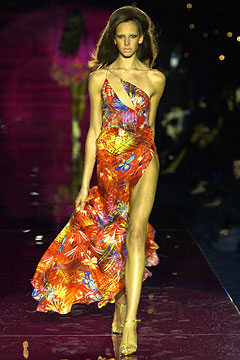
In her former life as a model, Abbey was walking the runway for the master of camp, Julian Macdonald. Naomi Campbell, in a feathered, hot pink robe and bikini, was walking towards Abbey. Naomi already struck her pose at the runway’s edge, voguing for the wall of photographers. Now it was Abbey’s turn.
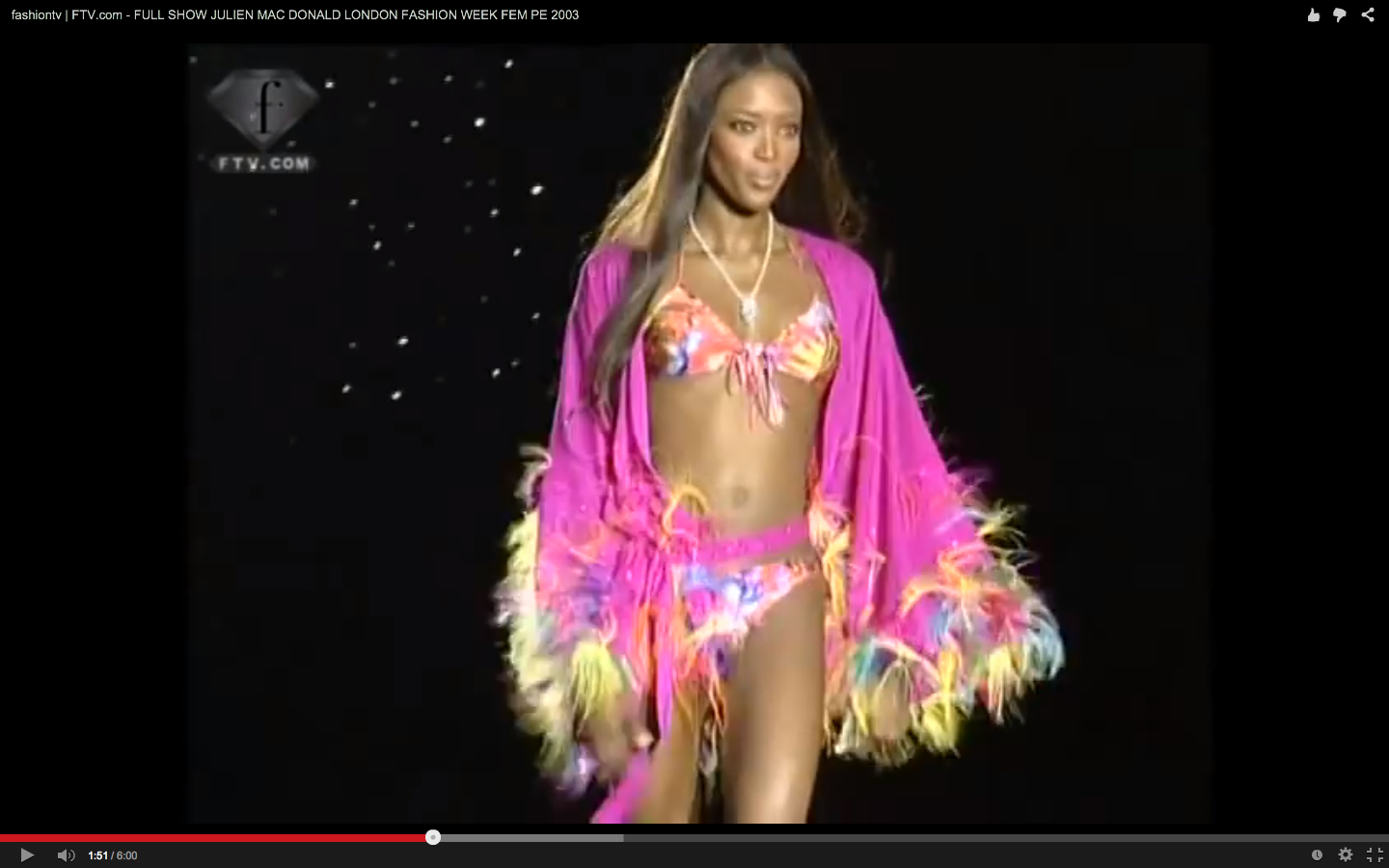
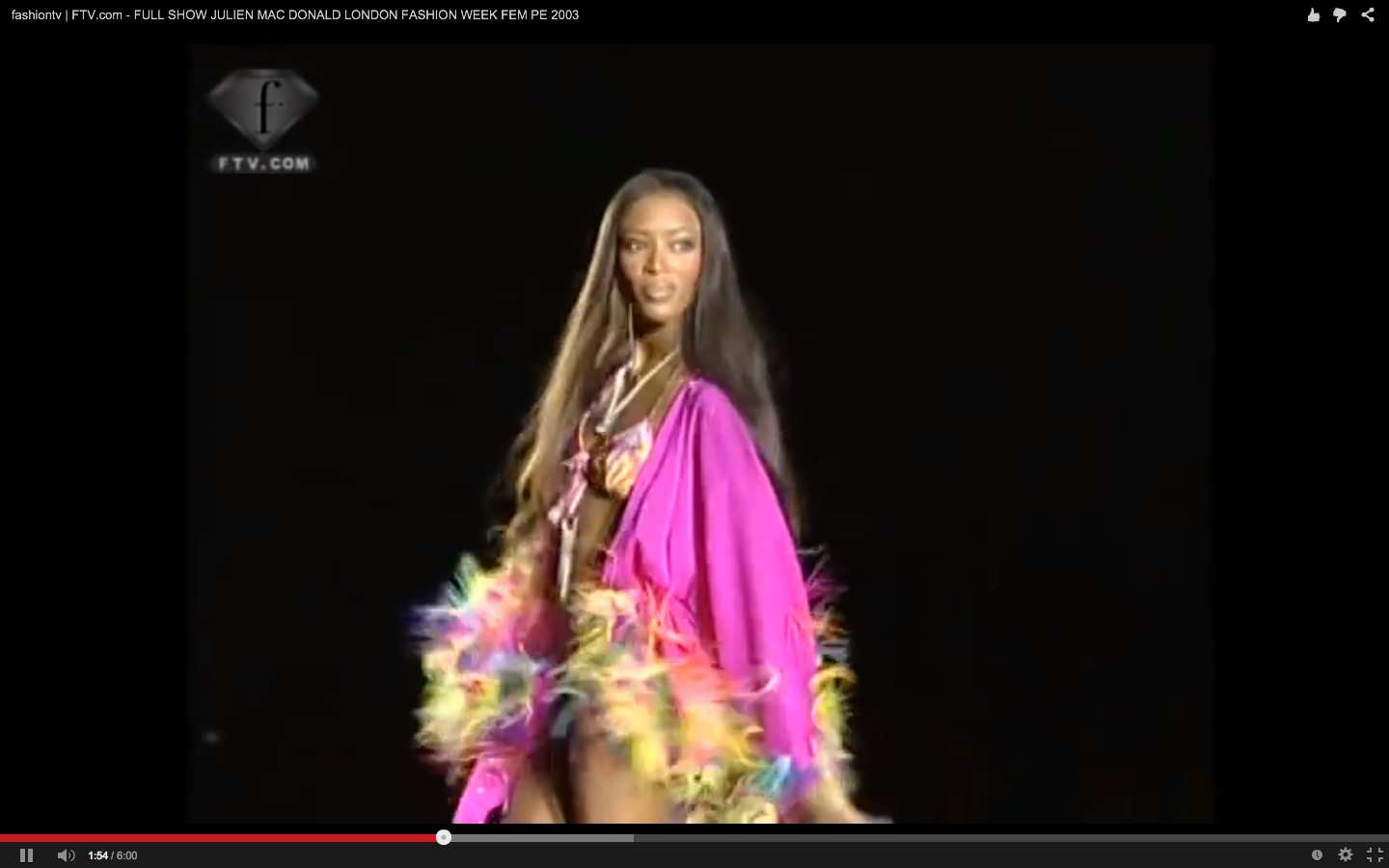
Just as the infamous Campbell passes Abbey, she throws a hard elbow into Abbey’s ribs. Granted the runway was narrow, and the heels were very high. It is completely plausible that Naomi could have lost her balance and accidentally elbowed Abbey square in the ribs.
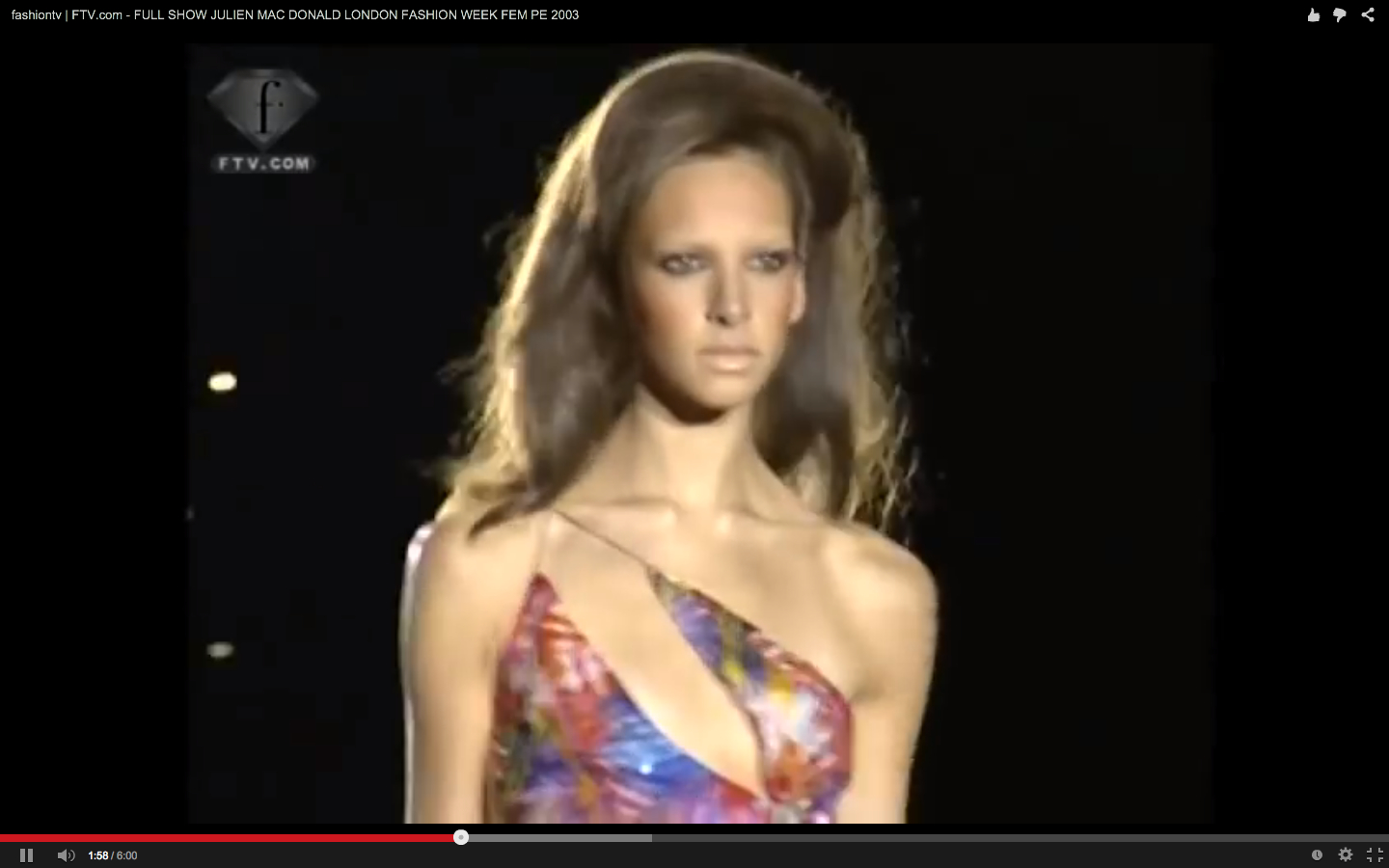
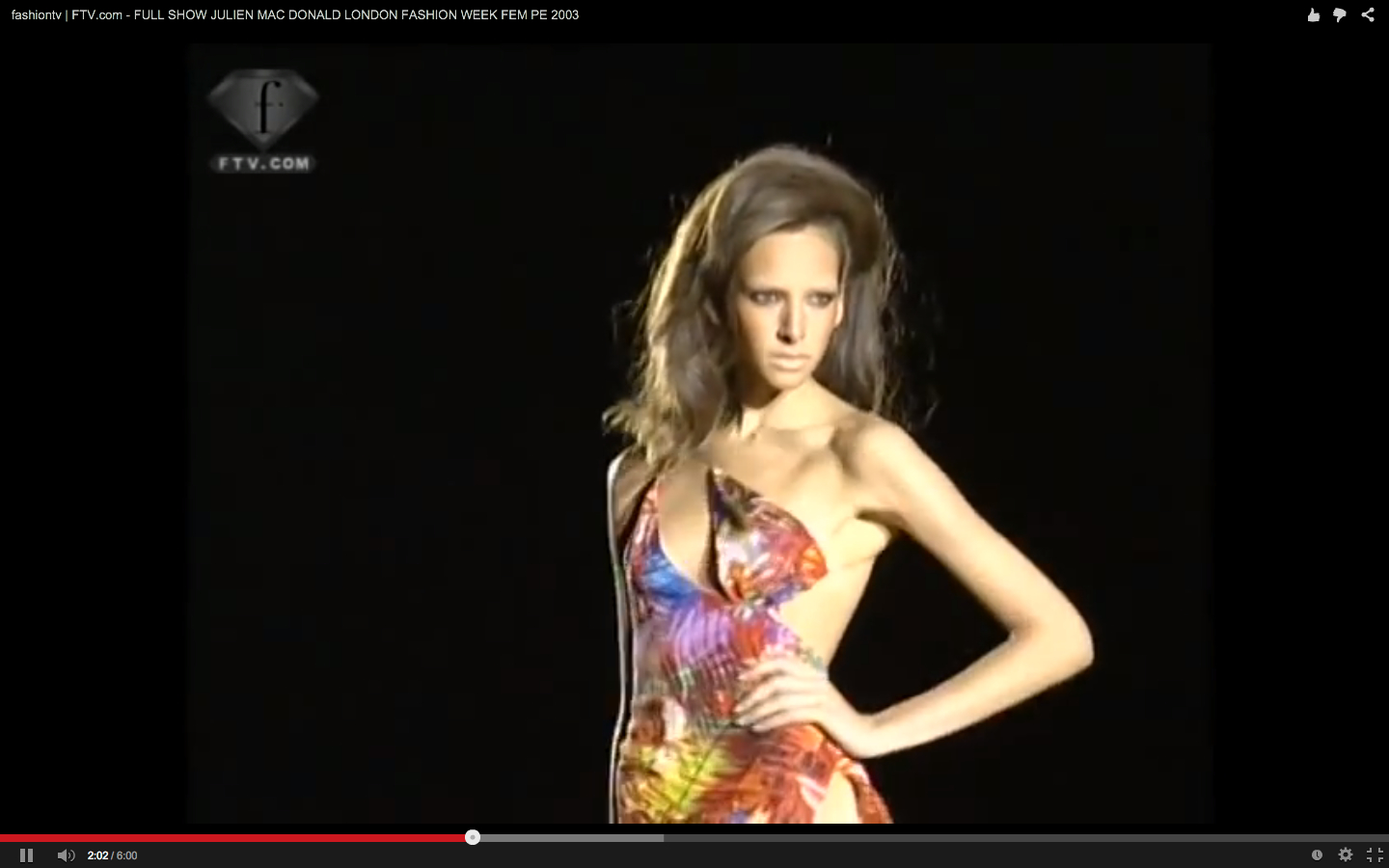
At the moment of the incident, clothed in well-placed strips of gaudy silk, Abbey took the blow and concentrated all her energy on maintaining her balance and stature. As a model her job was to strut, not fall, and Abbey is nothing if not literal.
Only once she was backstage did it occur to her that it likely wasn’t an accident. Naomi Campbell, in all her intricate thinking, had purposefully tried to nock Abbey off the runway. And by sustaining the blow and not budging, Abbey had simply abjured from the experience of being Naomi’s latest victim. What if she had fallen? What if Abbey chose to participate in the theatrics of drama, to which Naomi was extending an invitation? She was making an offer to Abbey, and in her naivety or adherence to the “rules of modeling,” Abbey had rather stupidly declined. Abbey’s career could have entered into the world of British tabloids. Abbey would certainly be booked for Julian’s next runway show along with Naomi. Make it a double feature! Why not? Julian and his PR agency would certainly conclude that a model brawl is good for business.
But Abbey didn’t fall. She didn’t even realize that there was a choice! And now this Ferguson is giving her the proverbial elbow in the ribs to test her resolve at playing nice and being the professional art student.
Instead of tearing his face off, she regains balance. She does not take the bait. But she does mentally rip apart his theory of “beauty sells.”
Beauty is bullshit that sells stuff. And there are more than enough beautiful things in the world instrumentalized to produce more junk.
Abbey muses; in the seventeenth century it was probably pretty amazing to check out a technicolor canvas as big as a moving van. Beauty did stuff then. It was powerful. Beauty had a constructive social role to play, but today? HD, IMAX, virtual reality, AI, Insta filters, and independent films shot in sepia? Where’s the power in beauty? Beauty is too simple. But add to the equation an elbow attack, something destabilizing. That’s when beauty becomes interesting. That’s when beauty reveals its potential and the all too alluring danger zone of sensational, tabloid shenanigans.
Abbey asks Ferguson about socially responsible, destabilized beauty but he’s deep in his iPhone.
“Ah shit, I forgot about that academic lecture. C’mon. Let’s go.” Abbey follows Ferguson into the darkened room where the evening’s lecture is being held.
Kenneth Unger, a visiting art historian, is nearly finished his presentation. The space is packed. He is the artworld’s Underground Academic Jesus: a prophet, about the Savior’s age, six feet tall. He’s sexy in a goofball, nerdy way. He’d become a cult figure on a network of grad student blogs. Abbey’s known him since her days as an undergrad at Columbia. He was the too moody post-doc that haunted the rare-soviet book collection at Avery Library. She was the tart dating her Professor Dmitri Green. They bonded over their lack of respect for most things and disinterest in others.
There’s a projected flow chart. “iPhones – iArt – iShart.”
Kenneth is holding his glasses in one hand and his lecture pages in the other. Looking disheveled, but passionate, he says, “As such, Whole Foods, or maybe better to say, the ideology of Whole Foods-ism has become the backbone in the life construction of the contemporary academic. There’s a Whole Foods located within ten miles of the ten largest American research universities, though there are hundreds of cities and lots of states without a single franchise. Whole Foods tells the academic that she’s not part of the problem; she’s part of the solution, a person acting locally to change the world globally. It’s a nineteenth-century Arts and Crafts aesthetic modulated from the realm of furniture design and architectural embellishment into the field of twenty-first-century lifestyle management. Whole Foods has created the psychological décor for the modestly upwardly mobile, petty bourgeois academic.”
“Rather than commitment to any historical idea of emancipation — you know, adherence to the principles of the Enlightenment, something like that — we, the intellectuals, the academics of the early 21st century, have ended up roaming supermarket aisles festooned with the iconography of small-scale emancipation — Free Trade Coffee and Free Range Chicken — that’s what gets us really pumped up. Our forms of emancipation become operative through deft tactical maneuvers on the way to the checkout line, not on the barricades. You might call this “whole people, whole planet” attitude, a kind of “liberal totalitarianism,” but I’d just call it a pathetic imitation of a whole life.”
“At Whole Foods and in university seminar rooms, we are acting as if all the world needs is for us to elaborate our critical insights with a bit more theoretical juice, buttress our ameliorative social gestures with just a bit more strategic shopping, and then the world’s ills will start getting addressed one Judith Butler citation and one organic kiwi purchase at a time.”
Kenneth goes in for the kill, putting his harsh black-rimmed glasses back on, and hugging the podium with both hands, raising his shoulders high. “You know what? You know what I’ve realized? I’ve signed up to be a dissent manager within the cultural sector of our advanced capitalist economic structure, and you know what? You want to know the whole truth? It sucks. Man, does it suck.” He looks down at the lectern, as if he’s really grappling with this fact, like maybe he’s coming to terms with the full implications of the whole truth right this second. Under his breath, he mutters “sucks.” His eyes shoot toward the ceiling. His tongue lolls around his mouth. Now he’s doing a convincing imitation of a son working through a childhood memory during a eulogy to his father. His eyes appear to glaze. His voice cracks on the word “and,” but he pushes on.
“And…And I’m just so fucking tired of doing this.” He stares at the audience, looming, Easter Island-like. Murmuring kicks in. Someone whispers, “It’s coming.”
His face hardens. The skin around his eyes tightens. Kenneth goes on, pointing his finger to emphasize each of his words, “This sucks. Seriously. This sucks.” He whirls around so that he’s a full three feet closer to the front row, “And you know what I say to all of this? Fuck it. Just fuck it. I don’t give a flying fuck.” He hurls his lecture papers straight above him into the air. They explode across the room like a squadron of Blue Angels on Memorial Day.
“Well, that’s kind of beautiful.” Abbey thinks.
But Kenneth keeps talking, karate chopping with his right hand, “You’re supposed to be the secret true friend of activism, radicalism, and progressive causes, to be the foster parent to a range of vapid substitutes for participation in any meaningful, world-transforming project. Now maybe that last part was a bit abstruse, a bit unclear. So let me break it down for you. By that I mean, I help you to throw your life away on utterly meaningless shit, and then I lie to you and tell you that what you’re doing ‘shows real promise.’” He stands at the podium for ten full seconds, holding his gaze at some point just above the back of the audience. Then he says with finality, “What you are doing does not show real promise. Fuck it.”
Lights come on. Hands go up, but Kenneth grabs his Poland Spring bottle and walks out the door, leaving his lecture on the floor.
Abbey follows, catching up with him. Imitating a fanatic, she says, “Excuse me, Professor Unger? Professor Unger? Was this lecture entitled Fuck It 13? Or Fuck It 12? I seem to have lost count and for my records I’d really like to be certain…”
Abbey notices Ferguson. He’s watching her with disdain taking this charade for truth. Fuck it.
“Shut it, Abbey. Where’s that shit hole you call a studio. We’re gonna have to have a studio visit. I need a place to cool down.”
Later that night.
“I’d throw the third brick. Sure, not the first. Probably not the second. But I’d be that not-so-badass motherfucker who throws the third brick. WHAM!” Kenneth triumphantly faux hurling a non-existent brick under a heat lamp at ChoSun Galbee.
Kenneth continues, “I’m a proud and unrepentant gamma male. Nothing wrong with it. We’re crucial for social change. And gammas get along well with Alphas, you know, that’s why I called Bill Powers. He’s the apotheosis of alpha. He’s out here doing a pilot for an art TV show or something. You know he publishes Blackbook? He’s a one-man artworld machine. He knows everybody.”
“I was in Blackbook once, wearing boots or scarves or something.” Abbey says, “And, you know, just for the record, next time, maybe we could look at my art for more than five minutes.”
Kenneth responds, “Abbey, really, how long did you expect me to stand there and chat with you about wood grains and Naomi Campbell. Yes, it is a world that lives off sensation. Yes, you are at a disadvantage because you will always be chum in the water. Your only option in the world is to get self-annihilating attention that will go after you for the basest of reasons. If you try to be smart, they’ll say you try too hard to cover insufficient intellect. You don’t care? They’ll call you vapid. You actually try to capitalize off the shit you are and have done, you become Naomi Campbell, hittin people over the head with a telephone. But guess what, sister. It’s no different for the rest of us.”
“Oh, I call some serious bullshit on that one.” Sips from her Hite and continues. “You’re a man being judged by an arena of men. And unfortunately, as with every other woman, that is our plight. Our audience will always be men. Theirs will always be the loudest criticism or praise. Those are the voices that dominate the social psyche. And you, white, solidly middle class, tenured and crying over your kiwis of freedom! Fuck that. I will always be understood as who I serve and how I serve. I am in the hospitality industry, and sure maybe you are too, nurturing the intellect of wealthy donors’ children, but in this mansion of capitalism and servitude my cast is fucked by virtue of being fuckable. And what’s my recourse? Being gay? Yet another fantasy met. Maybe if I gain a lot of weight…” Abbey takes a moment, seriously reflecting on the bull-dyke scenario.
http://www.ourliteralspeed.com/content/ols010aa.html
Bill Powers tears through the waiting area of the restaurant, leaving a wake of startled patrons. Powers is coming straight from the set of The Bravo Channel’s Work of Art where he is one of the show’s critics. He’s decked out in a vintage suit and a maroon ascot. His hair looks like a giant mass of bed head. For Powers the mantra is: “I’m going to die. I don’t have time for introductions and small talk. Let’s get straight to the action. I’ll figure out who you are if you say something worth remembering.”
Kenneth acknowledges Powers’ arrival with the slightest upward lift of his index figure, then out of the blue Kenneth asks, “What’s the greatest work of art of the twentieth-century?”
Powers does not miss a beat as he pulls out his chair, “Guernica.”
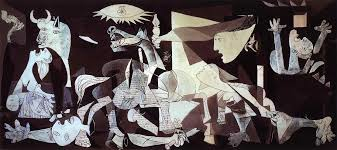
Abbey says, “A white man made a thing circa 1950?”
Kenneth pleased with Abbey’s on cue brattiness. “It’s the Bloody Sunday March in Selma, Alabama in March 1965.”
“Ugh, you are such an opportunist!” Abbey announces.
Powers looks bewildered. “What?”
Kenneth is all in. “The march over the Edmund Pettus Bridge was the greatest work of American art in the twentieth century.”
Powers and Abbey are willing to go there. Kenneth is pleased his opening conversational gambit is garnering this reception.
“It’s all there. Harmony. Violence. Negation. Collectivity. Sure, the march owes a lot to Gandhi, but there’s something different here. It’s one thing to tell the British to get out of your country. It’s a whole other thing to say: Hello white neighbor! Come over here and attack me, and then I’ll see you again tomorrow.”
“Why is it art?” Powers asks, like a judge cutting off a mouthy litigant.
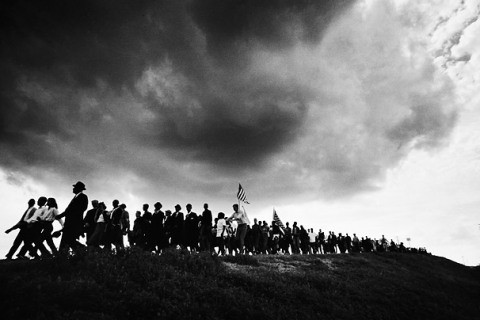
“The whole situation around the march is so artful that eventually it’s got to become art. The way they wore suits and Sunday dresses. Everyone’s in gray, brown, black and white. They marched in these Agnes Martin lines. Two feeble little rows passing over the bridge straight into infinity. And you have to realize they’re marching straight at a wall of Alabama state troopers with baseball bats and gas masks and horses, but the marchers do not deviate. They just walk. No yelling. No talking. Not even any gestures, totally impassive. The opposite of a rabble. No signs with slogans. It’s all extremely formal. These are all modernist gestures. To me, the Civil Rights Movement, when everything’s said and done, will not be seen as a political event. It’s the greatest work of modern art.”
“Not political? Not political? What’s more political than ten percent of Americans demanding their basic rights?” Abbey blurts.
“I know, I know. What I’m talking about is history, the way any statue from 10,000 BC now looks like it’s art. It doesn’t matter if some king beheaded six thousand people at the base of that statue; today it’s going to be meaningful primarily as art, not as an executioner’s block. Form outlives content. Some cheap jug of wine from Delphi is probably sitting in the Louvre today. Same thing here. I’m talking two hundred, three hundred years from now, you see? That march will be understood as this amazing example of collective altruism unleashed in the public sphere, and like all Modernists, the marchers got the basic paradox down: if you’re a Modernist, if you’re like Picasso or some Dada poet, you know, Hugo Ball, or whatever, then you know you have to lose if you want to win. Want to save painting? Make your painting incomprehensible. Want to save poetry? Make it a mutant jumble of sounds. And if you’re living in Selma and you’re black, want to save your life? Make your life unlivable.”
Powers ticks off two rapid-fire queries: “Mass acts of altruism will be seen in the future as art? Martin Luther King is the greatest American artist of the last century?”
“Yes and yes.”
Abbey perks up, “Let me get this straight: first, you got the avant-garde, Baudelaire and Manet, right?”
“Yeah.”
“Then museums go avant-garde. They give homes to those original avant-garde gestures. That way they show how freethinking and open they are.”
“Yeah.”
“And then about the time the Museum of Modern Art takes off and modern art is accepted by the general public, the sensibilities that drove modern art migrate, uh, into… uh, new areas of public experience outside visual art? Like civil rights? That’s what you’re saying, Kenneth?”
“Exactly. Think about the timing. Postmodernism, Pop Art, Warhol, all of that’s happening at the same time the civil rights movement comes along. It’s just obvious that the civil rights movement was this huge Modernist happening, but no one’s realized it yet. I mean a real happening, not some self-congratulating, I gotta be me, Woodstock masturbation.” He pauses. “But that’s all done. The avant-garde, all of that. It’s totally done. Now we’re living in the age of dissenting and surprising art, WTF/OMG art.”
“LOL” Abbey adds.
“Let’s not forget IRONY. All caps.”
“Yeah. Sure.” Kenneth waves over the waitress. “Another order of pork dumplings, please.”
Looking at Abbey, Powers says, “And you, young lady are the purveyor of WTF and OMG to the overeducated and overmonied. Cheers to your future career.” He bows his Hite Stout in her direction.
Kenneth says, “Dissent and Surprise for an elite clientele.”
Powers adds, “But the one thing you can’t do, cause it screws with the vibe, is point too much to the machinery behind the WTFs and OMGs. Like you don’t want to see the wizard in action.”
Kenneth says, “The artworld has euthanized Toto. He won’t be pulling back the drapery so you can inspect the cheap mechanics: the artist sucking up to her letchy profs at the trendy art school; the art critic writing as a paid publicity hack; the handsome magazine editor dry-humping the artist at the afterparty at the Chateau.”
Abbey cuts Kenneth a narrowed eye glower.
“Wha?” Kenneth says defensively.
“Did I tell you that story?” Abbey asks with real embarrassment.
“Ha! See?! All this stuff does exist. See what I’m saying?”
“Well, as one who actually was dry humped by the editor of a major fashion magazine at an after party at the Chateau, no point in denying it. Might as well embrace my cliché. The interesting thing is that I think both said editor and myself are confused about who and what he dry humped. He knew me as a model, so according to him he dry humped a model, but reality dictates that this took place like a few weeks ago, so he actually dry humped an artist. A major fall in the ranks of social hierarchy. So, which is it?” She looks back from Kenneth to Powers in mock helpless confusion.
Powers closes his eyes, stretches his arms outward, palms up, then speaks as if he’s a Zen master, “You are truly the anus in the Venn diagram of dry humpage.” He inclines his upper body toward Abbey in a monkish nod.
Digging into the fresh tray of dumplings, Kenneth announces, “You can make normal art all day. Got some pretty little lo-fi paintings? No problem. As long as the flowery landscape is, like, a picture of Heinrich Himmler’s grave in the springtime or some shit. You know, gotta surprise ‘em. Crazy art? Also, no problem. You’ve got a big red, white and blue hot air balloon filled with howling hyenas as your art? Sure, do it. Call it George W. Bush’s Unconscious and you’ll be all over the Internet. There are no critical standards. Surprise ‘em, you know? Or you can make art that builds out of the artworld reality that you live in, but then you have to dissent from it. Make your gallerist take laxatives everyday so she shits continuously, then turn the shit into a frozen shit-sculpture portrait of the gallerist as an anti-commodification gesture? Go for it! You see? You can attack the artworld reality, or you can pretend it doesn’t exist, but what no one does is just make that artworld reality their art.”
“Um, I’m pretty fucking sure that is what I’ve been doing!” Abbey says.
“Oh, right by juxtaposing bits of information that kinda, sorta are adjacent to art and providing a wooden platform, stadium, arena, whatever the fuck, to facilitate that conversation? It’s like the most didactic display of a hope for democracy!”
“You’re an ass.” Abbey shoots.
“And you’re being too weak! Too reliant on the viewer’s mind to do all the work and connect the dots. You are such an optimistic liberal! You think every art viewer reads the New Yorker and has the classically cynical mind of a Russian Jew! Oh, and cares about artists. I mean, who really cares about artists? No one till there worth a few million and rep-ed by Gagosian or appear on Stefan Simchowitz’s Facebook page.”
Powers throws up a palm and he and Kenneth meet with a decisive high-five.
Abbey’s exhausted. “All I know is this, I am not going to become an artist today by trying to become an artist.”
Kenneth nods, “Yeah, go on.”
“It’s pointless to try to get conventional success by making art in the studio or producing some giant interpretive dance with transgendered youth, or whatever your particular shtick is. Instead you’d make your art be about the way you actually become an artist. Like analytical Cubism makes you think about how paintings are made, instead of just giving you a pretty painting. The content of your art and the content of your life kind of more or less become synonymous. You manifest a kind of miniature artworld. You’d make art about becoming the dry humped female artist, instead of just being a dry humped female artist. That way anyone looking, thinking, or participating in your art is pretty much implicated as a participant in cultural production! Their desires, their expectations of the female artist to perform are the art! Fuck satire. Fuck irony. Make it literal. And make it about the process, about a becomingness. Not being, becoming. What you do would not be about anything, it would become something. I mean, literally, it would become whatever it is and that’s what it would become. My Literal Becoming. I’m A Literal Debutant. My Literal Speed.”
“Our Literal Speed.” Powers blurts.
“Um, sounds good to me. ‘It would become whatever it is and that’s what it would become.’ How can you argue with that? It’s the Seinfeld paradox.” Kenneth says, pausing his beer at his lips. “Our Literal Speed.”
A hand lands on Abbey’s shoulder. She’s startled. It’s Dmitri Green looking down at her, a clenched smile forming.
Abbey stands and lifts her right hand to him as he opens his arms to her. A misfire. They regroup and compromise on a brief hug of familiarity. He’s slightly graying at the temples.
“Top five percent of attractiveness for his age group.” Powers declares.
“Dmitri Green, this is Bill Powers and Kenneth Unger.”
Dmitri eyes the men trying to discern whether Abbey’s sleeping with either or both of them. He places a hand on the base of her back.
“Good seeing you, Abbey.” He kisses her on the cheek, and rejoins a cackling, black clad group heading out the door.
“So, becomingness? That’s the famous Prof. Green, heh? The key to female becomingness seems to be the men they schtupp.”
“Relentless.” Abbey says diagnostically.
 abjour